
Privacy Coins
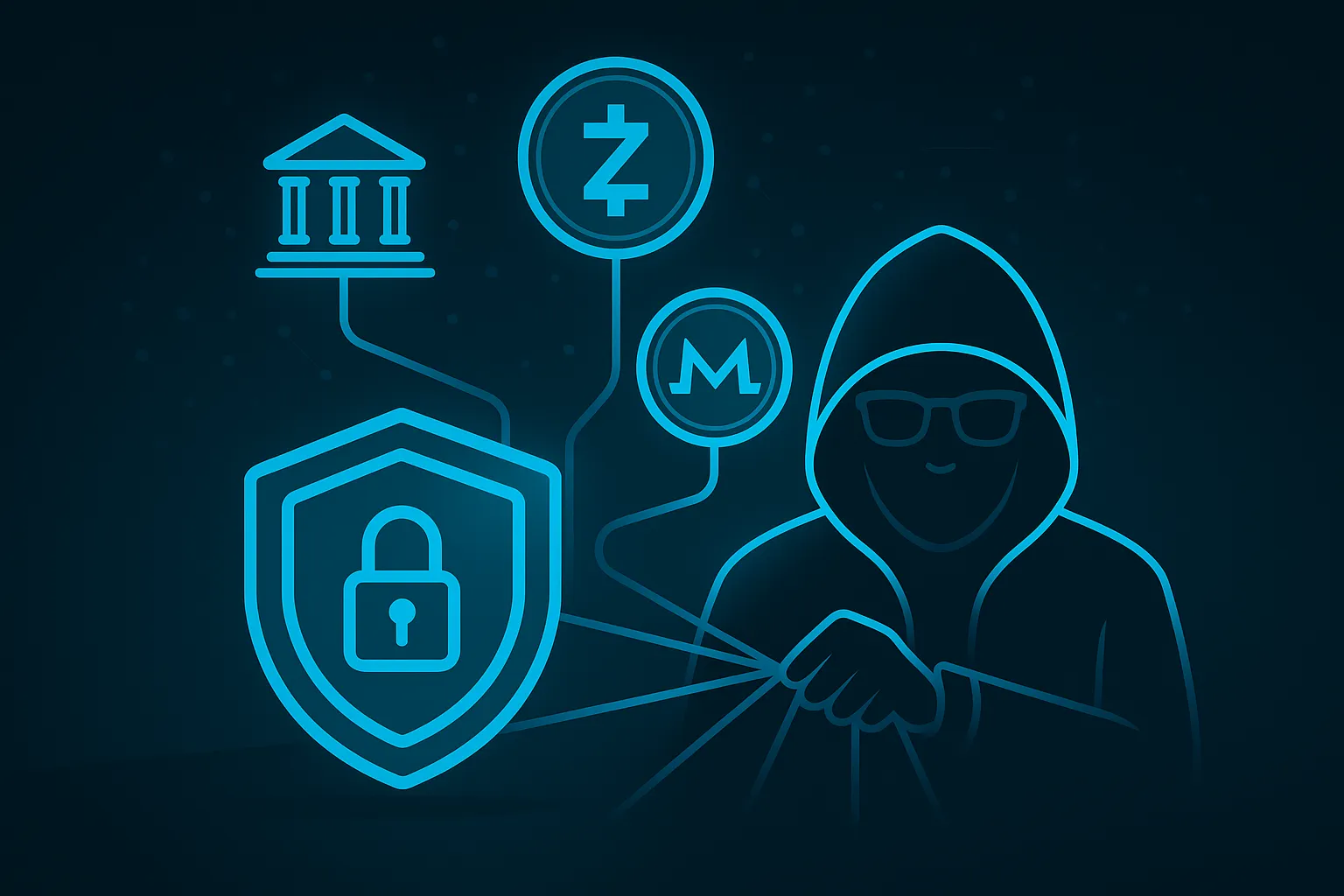
🔒 Privacy Coins Are Back — and They’re Here for the Right Reasons
The renewed surge of interest in privacy coins — like Zcash (ZEC), Dash (DASH), and Railgun (RAIL) — isn’t random hype. It’s a reaction. A reaction to the ever-tightening web of financial surveillance, expanding KYC/AML enforcement, and the creeping normalization of total visibility.
This movement reminds everyone what DeFi was really built for: → freedom, privacy, and self-sovereignty, not endless compliance checklists.
Contents
🕵️ What Exactly Are Privacy Coins?
Privacy coins are cryptocurrencies designed to make transactions untraceable and anonymous — unlike Bitcoin or Ethereum, where every move is publicly visible on the blockchain.
With BTC or ETH, anyone can see: • the sender and receiver addresses, • the transaction amount, • and sometimes even link those addresses to real identities through on-chain analysis.
Privacy coins use advanced cryptography to hide all that.
How They Do It
Mechanism What It Does Example Zero-Knowledge Proofs (zk-SNARKs) Prove a transaction is valid without revealing any details Zcash (ZEC) Ring Signatures Mix signatures from multiple users, making it impossible to tell who signed Monero (XMR) Stealth Addresses Generate unique, one-time addresses for each transaction Monero, Haven, Railgun CoinJoin / PrivateSend Blend multiple transactions in a pool to break traceability Dash (DASH)
Each method defends one of the most basic digital rights: the right not to be watched.
⚖️ Privacy vs. Compliance — The Eternal Battle
Privacy coins are technically brilliant, but politically radioactive. • 🔴 Regulators (US, EU, Asia) view them as threats to AML enforcement. • ⚙️ Major exchanges — Binance, Kraken, Bittrex — have delisted them to stay compliant. • ⚡️ Result: liquidity dropped, but the narrative of self-sovereignty is back stronger than ever.
The irony? DeFi was supposed to be trustless and permissionless. Now, too many layers of “compliance middleware” are turning it into CeFi 2.0.
💥 Why Privacy Coins Are Exploding (Again)
Here’s why the privacy narrative is roaring back in late 2025:
- Geopolitical & Regulatory Pressure → More surveillance, KYC rules extending to non-custodial wallets, mixers banned (RIP Tornado Cash). → People want sovereign alternatives.
- Financial Privacy Narrative → As CBDCs rise and KYC networks interconnect globally, people realize how little privacy remains. → “Better have an option for true privacy” is becoming a survival instinct.
- Technical Innovation → Zcash adopts Halo2 and recursive zk-proofs. → Railgun integrates directly with Ethereum & Arbitrum, bridging privacy and DeFi. → Dash is quietly rebuilding its fast-payment layer with optional anonymity.
- Speculative Rotation → After AI coins and memecoins, the market’s chasing a new theme — and privacy is hot again.
📈 The Core Players
Ticker Project Key Feature 2025 Context ZEC Zcash Native zk-SNARKs, selective privacy Old giant with modern zk tech revival DASH Dash Instant payments + optional PrivateSend “Better Bitcoin” making a comeback RAIL Railgun Privacy layer for Ethereum & Arbitrum Deep DeFi integration, stealth transfers
⚠️ Before You Ape In
• Hard to list: most centralized exchanges dropped them. • Increasingly monitored: some bridges block anonymous flows. • Thin liquidity = violent volatility. • Long-term value depends on regulation: if CBDCs go mainstream, privacy coins might become the only escape hatch left.
🧭 Final Thoughts
Privacy coins aren’t tools for hiding money — they’re digital shields against a financial system that’s becoming disturbingly transparent and centralized.
They stand for the core values of crypto: • individual sovereignty, • decentralization, • freedom from arbitrary control.
If we lose financial privacy, DeFi becomes just another banking app with a better logo.
So yes — privacy coins are exploding. But maybe they’re not “pumping”… maybe they’re waking people up.